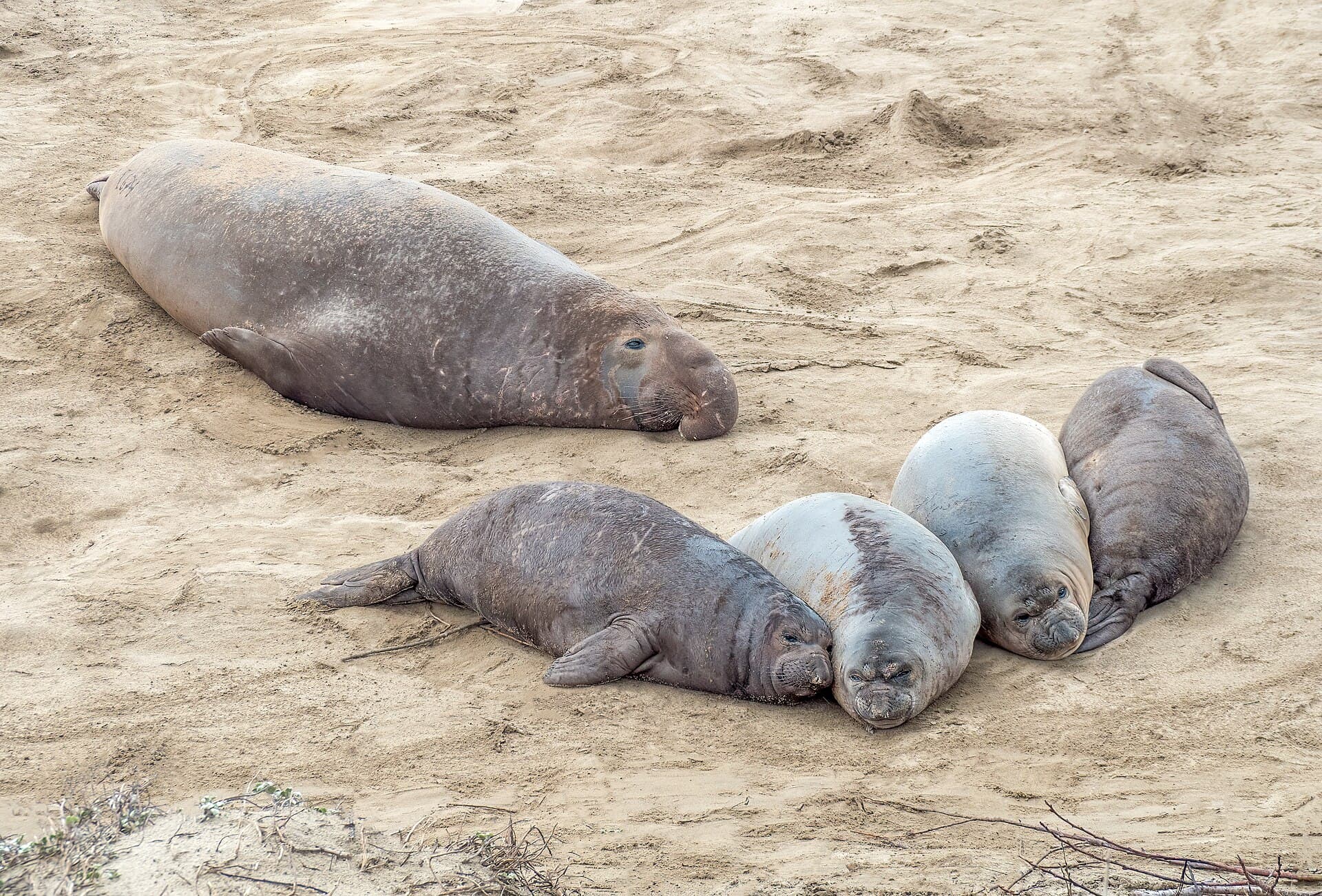
Every winter, a remarkable wildlife spectacle unfolds on California's coast. Thousands of northern elephant seals haul out onto the beaches to give birth, nurse their pups and fight for mates. It's loud, smelly and absolutely unforgettable.
A conservation success story
In the 1800s, elephant seals were hunted for the oil in their blubber until only a tiny population survived on Mexico's Guadalupe Island. Protected by Mexico and the United States, they slowly returned. Today there are well over 200,000 northern elephant seals, and colonies dot the California coast.
Meet the giants
Adult males can weigh up to 5,000 pounds and grow the long, inflatable nose that gives the species its name. They arrive first, in late November and December, to battle for territory. Females follow and give birth to a single pup, which nurses for about a month.
Where to see them
Año Nuevo State Park
About 55 miles south of San Francisco, Año Nuevo hosts one of the largest mainland breeding colonies in the world. During the breeding season, from mid-December through March, visitors can see the seals only on guided walks, which sell out quickly. Book early through the state parks reservation system.
Piedras Blancas, near San Simeon
On Highway 1 just north of Hearst Castle, the Piedras Blancas rookery has a free, accessible viewing boardwalk open year-round. It's one of the easiest wildlife stops in California.
Viewing etiquette
Elephant seals may look slow, but they can move quickly on sand. Stay at least 25 feet away, never get between a mother and pup, and keep dogs away from the beaches.