Death Valley National Park is a land of extremes: the hottest air temperature ever recorded, the lowest point in North America and the largest national park in the contiguous United States. Visit in the cooler months and you'll find one of the most beautiful landscapes in California.
When to go
November through March is ideal, with daytime temperatures that are often comfortable for hiking. In wet years, spring can bring wildflowers. Summer is dangerous: temperatures regularly exceed 120°F. If you visit then, stay near your car and avoid hiking after 10 a.m.
Top stops
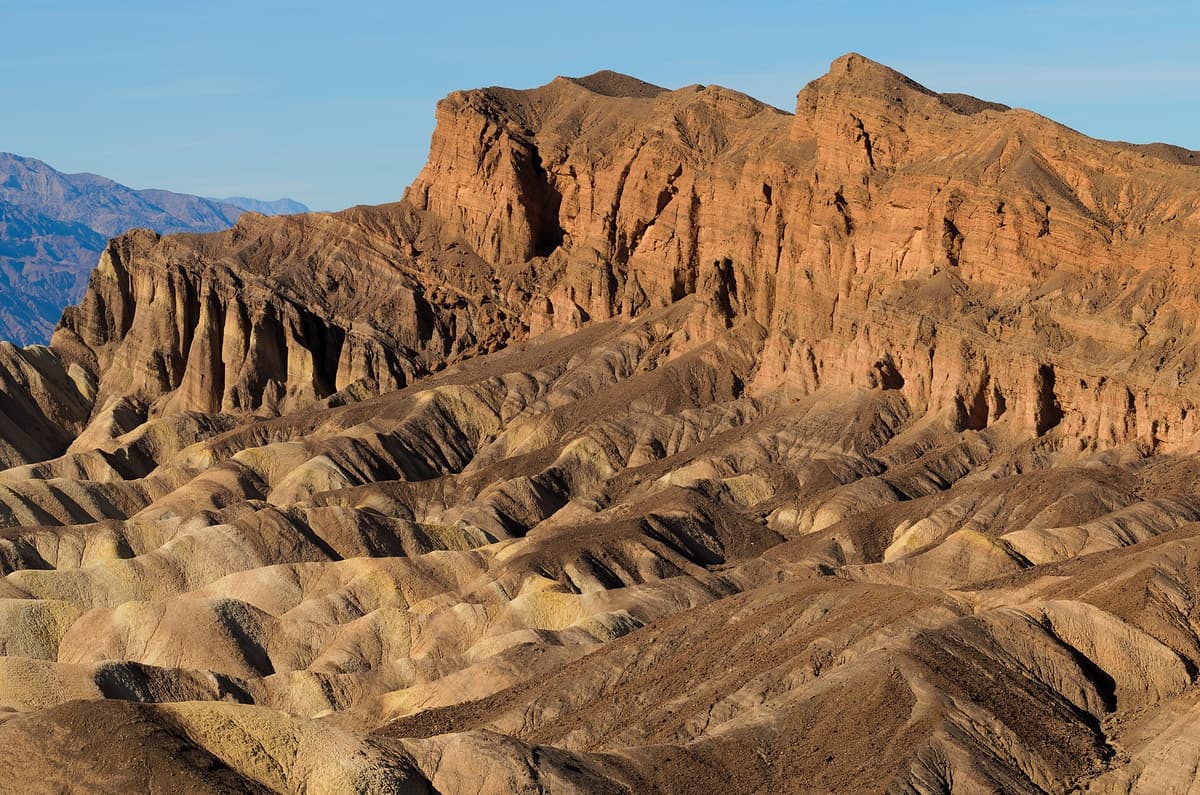
Zabriskie Point
Arrive before sunrise to watch the first light turn the folded badlands gold, orange and pink.
Badwater Basin
Walk out onto the vast salt flats at 282 feet below sea level. Look back at the mountains for a sign marking sea level high on the cliff.
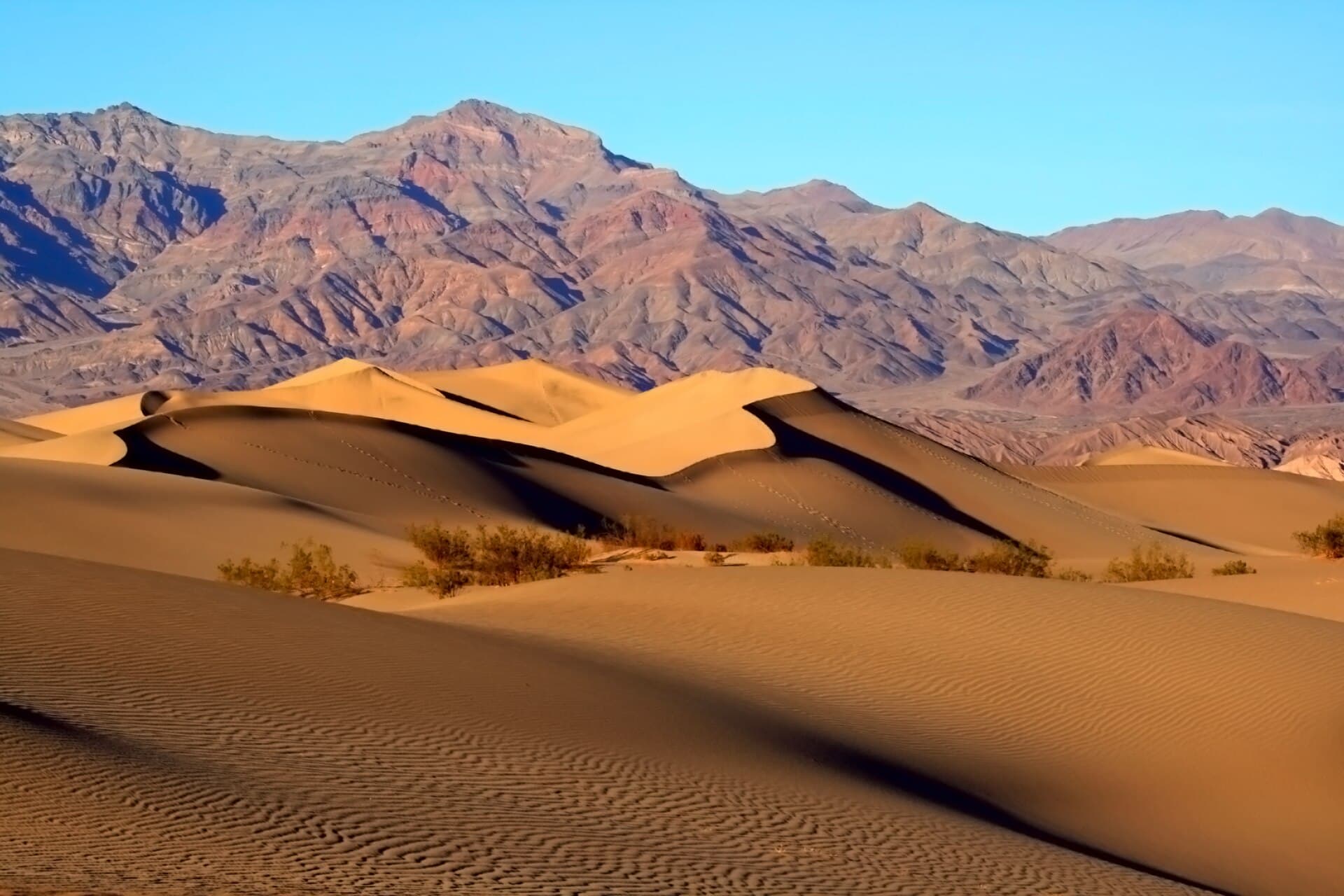
Mesquite Flat Sand Dunes
The most accessible dunes in the park, near Stovepipe Wells. They're best at sunrise or sunset, when shadows reveal every ripple.
Artists Drive
A one-way loop through hills streaked with mineral colors, including the pastel slopes of Artists Palette.
Dante's View
From more than 5,000 feet up, you can look straight down at Badwater Basin with Mount Whitney often visible on the horizon.
Safety essentials
- Carry at least a gallon of water per person per day.
- Fill your gas tank before entering, as stations inside the park are few and expensive.
- Cell service is extremely limited. Download maps.
- Don't rely on GPS shortcuts on unpaved roads.